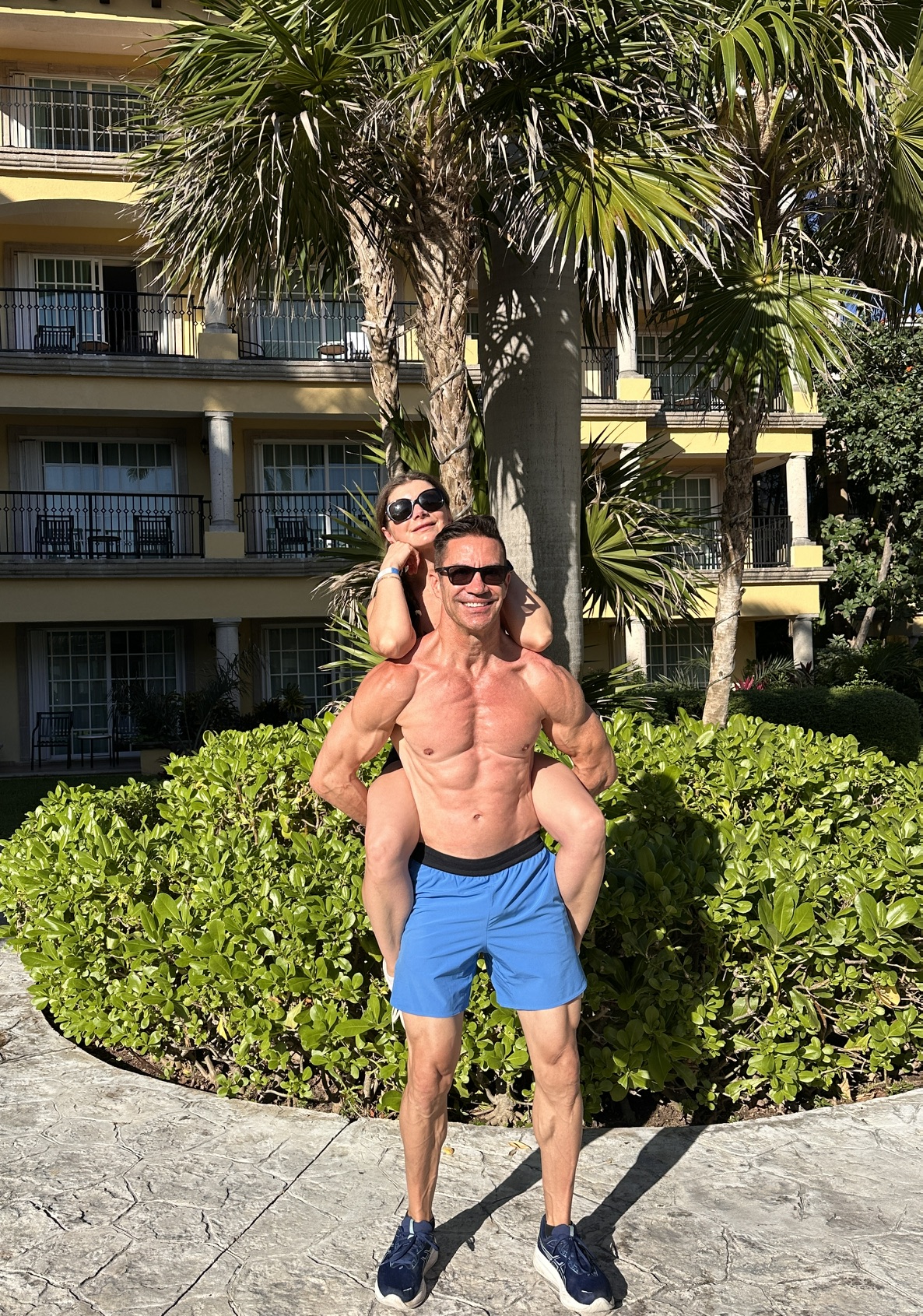

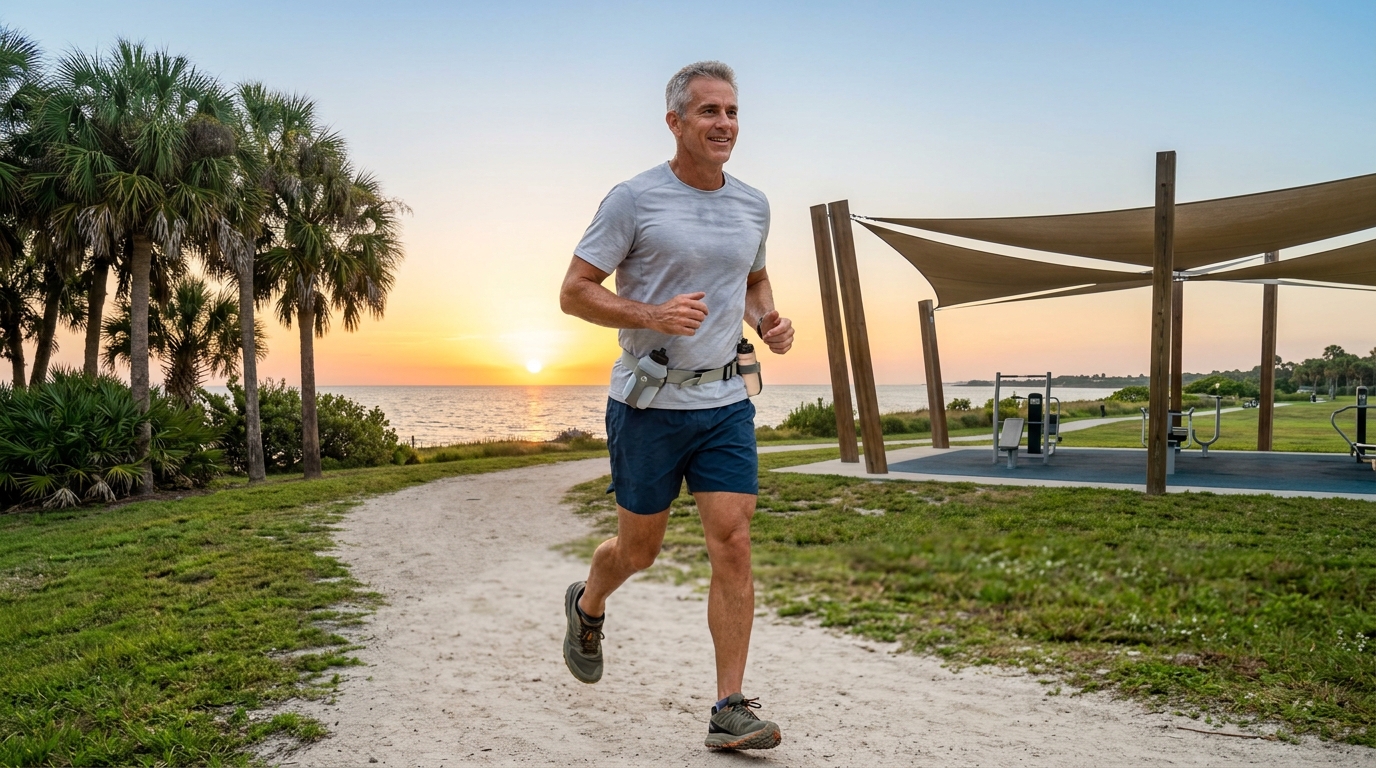
The summer heat in Florida isn’t just warm—it’s thick enough to cut with a butter knife. If you’re a man over 50 living in or visiting the Sunshine State, you already know the scenario: you step outside for a brisk walk or a garage workout, and within four minutes, your heart rate spikes, your legs feel like lead, and half your energy vanishes.
Bottom Line: Training over 50 in extreme heat requires shifting heavy compound lifts into climate-controlled indoor spaces, managing intra-workout electrolyte loss with targeted sodium, and keeping outdoor cardio strictly in low-heart-rate Zone 2.
Maintaining your strength, energy, and momentum as a guy over 50 is non-negotiable. Building and preserving lean muscle mass isn’t just about looking good in a t-shirt—it is the ultimate currency of healthy aging. Strong muscle tissue, solid bone density, crisp metabolic health, and vibrant energy are your tickets to enjoying everything Florida has to offer, from golfing and fishing to keeping up with your family.
The secret isn’t working harder against humidity; it’s adapting your routine so you can stay lean, strong, and energized without burning out your central nervous system.
1. What Happens to Your Body Over 50 in Extreme Heat?
Quick Answer: As men age, thermoregulation efficiency decreases and cardiovascular demands double during hot workouts because blood must simultaneously supply working muscles and cool the skin.
To conquer the heat, you have to understand what your body is up against when temperature and humidity spike.
When you cross age 50, two key physiological shifts occur:
Thermoregulation Efficiency Drops: Sweat gland output and skin blood flow responsiveness gradually decrease with age. It takes greater metabolic effort for your heart to push blood to the surface of your skin to radiate heat.
Cardiovascular Stress Multiplies: During a workout in 90°F (32°C) heat with 80% humidity, sweat cannot evaporate efficiently. To compensate, your heart pumps oxygenated blood to working muscles and diverts massive blood volume to your skin to prevent overheating.
If you try to run the exact same high-intensity routine outdoors in July as you do in January, your central nervous system takes a beating. The result is deep systemic fatigue, brain fog, lost strength, and stalled momentum. To keep making progress without overtraining, you must balance training intensity with smart fatigue management, ensuring you monitor your effort using tools like Repetitions in Reserve (RIR).
2. The Golden Rules of Hydration & Electrolytes
Quick Answer: Prevent heat fatigue by consuming 500–1000mg of sodium before workouts, replacing lost fluids based on post-workout scale weight, and replenishing magnesium to protect heart and muscle function.
When you sweat heavily in Florida humidity, you don’t just lose water—you flush out critical minerals, primarily sodium, potassium, and magnesium.
Sodium controls fluid retention and blood volume. When sodium drops, blood volume decreases, forcing your heart to beat faster just to maintain basic output. That’s when the dreaded “Florida brain fog” and heavy legs set in.
The Daily Heat-Hydration Protocol
| Timing | Target Intake | Primary Purpose |
|---|---|---|
|
Morning Primer (Upon Waking) |
16–24 oz water + 1/4 tsp sea salt (or quality electrolyte mix) |
Rehydrates system before morning coffee and restores baseline sodium. |
|
Intra-Workout (In Heat) |
20–30 oz water with 500–1000mg sodium per hour | Maintains circulating blood volume and prevents heat-induced cramps. |
| Post-Workout Recovery | 24–32 oz fluid per pound of lost sweat weight | Restores fluid balance and accelerates core temperature cooling. |
Strategic Hydration Rules:
The Morning Primer: Start your day immediately with 16 to 24 ounces of water mixed with a pinch of high-quality sea salt or a zero-sugar electrolyte packet. Do this before your morning coffee.
Salt Is Not the Enemy: Unless your physician has explicitly placed you on a strict low-sodium medical diet, active men over 50 sweating in hot climates require baseline sodium to support nerve signaling and muscle contraction.
Gauging Fluid Needs: A simple scale check helps quantify your fluid loss. Weigh yourself right before and right after an outdoor session. If you lost 2 pounds, that’s almost purely water weight. You need to consume roughly 24 to 32 ounces of fluid over the next two hours to restore balance.
3. How to Restructure Your Workout Routine for High Heat
Quick Answer: Protect your central nervous system by moving heavy strength training indoors, shortening outdoor workouts to 35–45 minutes, and exercising during early morning or late evening hours.
You don’t need to stop training hard—you just need to adjust your environment and timing. Here is how to structure your training weeks when the heat index climbs above 90°F.
Rule A: Move Heavy Compound Strength Work Indoors
Reserve max-effort compound lifts—barbell squats, deadlifts, bench presses, and heavy overhead presses—for air-conditioned gyms or cool garage spaces. These movements place heavy demands on your central nervous system, and combining peak neurological stress with heat stress is a fast track to exhaustion. Preserving joint health while driving hypertrophic signals requires clean execution. Discover why focusing on hypertrophy training is the smartest investment for men over 50 when done under optimal recovery conditions.
Rule B: Embrace "Density" Over Duration
Avoid dragging 90-minute outdoor sessions. In high heat, shift to 35 to 45-minute high-density workouts.
Reduce your set volume slightly (e.g., move from 4 sets down to 3 high-quality sets).
Use paired sets (antagonistic supersets), such as alternating a Chest-Supported Row with a Dumbbell Incline Bench Press. This keeps your heart rate elevated productively while cutting total workout time in half.
Rule C: Master the Florida Clock
In Florida, the sun isn’t just hot; the UV index and ambient radiant heat peak brutally between 11:00 AM and 4:00 PM.
Dawn Patrol (6:30 AM – 7:30 AM): Lower ambient temperatures and zero solar radiation make this the ideal window for outdoor movement, even if humidity is high.
Dusk Sessions (After 7:00 PM): Better solar protection, though concrete and asphalt retain heat throughout the day—stick to shaded or grassy areas when possible.
4. Sample Weekly Workout Split for Men Over 50
Quick Answer: A balanced summer split alternates indoor hypertrophy lifting with early morning outdoor Zone 2 cardio, ensuring strength retention without thermal exhaustion.
This practical, joint-friendly weekly template keeps energy high and protects your recovery capacity all summer long.
| Day | Environment | Focus / Workout Routine |
|---|---|---|
| MONDAY | Indoors (AC) | Upper Body Hypertrophy & Core |
| TUESDAY | Outdoors (Dawn) | Zone 2 Low-Heart-Rate Cardio |
| WEDNESDAY | Indoors (AC) | Lower Body Strength & Joint Health |
| THURSDAY | Active Recovery | Pool Swim, Mobility & Stretching |
| FRIDAY | Indoors / Shade | Full Body Conditioning & Carries |
| SATURDAY | Outdoors (Dawn) | Recreation (Golf, Paddle, Walking) |
| SUNDAY | Rest & Recovery | Complete Rest & Thermal Recovery |
Day 1: Indoor Upper Body Hypertrophy (Climate-Controlled)
Goal: Build shoulder, chest, and back strength without heat stress.
| Exercise | Sets | Reps | Rest | Focus / Cues |
|---|---|---|---|---|
| Neutral Grip DB Incline Bench | 3 | 8–10 | 90 sec | Keeps shoulders safe and pain-free |
| Chest-Supported Cable Row | 3 | 10–12 | 90 sec | Protects lower back, full lat stretch |
| Standing Cable Face Pulls | 3 | 15 | 60 sec | Posture check & rotator cuff health |
| Dumbbell Hammer Curls | 3 | 10–12 | 60 sec | Elbow stability & grip strength |
| Tricep Rope Pushdowns | 3 | 12–15 | 60 sec | Constant tension on triceps |
Day 2: Outdoor Dawn Zone 2 Cardio (Early AM)
Goal: Expand aerobic capacity and heat adaptation without cardiovascular strain.
Activity: 30–40 minutes of steady-state brisk walking, light rucking (10–20 lb vest max), or outdoor cycling.
Target Intensity: Keep heart rate strictly in Zone 2 (roughly 100–120 BPM for most men over 50, or a pace where you can comfortably hold a full conversation without gasping).
Adaptation Note: If training across different warm climates or traveling, check out our guide on the best exercises for men over 50 in warm climates for regional training adjustments.
Day 3: Indoor Lower Body & Joint Health (Climate-Controlled)
Goal: Preserve leg power, knee health, and hip mobility.
| Exercise | Sets | Reps | Rest | Focus / Cues |
|---|---|---|---|---|
| Goblet Squat (to Box) | 3 | 8–10 | 2 min | Core engagement; keeps spine upright |
| Romanian Deadlift (RDL) | 3 | 8–10 | 2 min | Focus on hip hinge & hamstring load |
| Bulgarian Split Squats (or Step-Ups) | 2 | 10/leg | 90 sec | Unilateral balance and knee stability |
| Standing Calf Raises | 3 | 15 | 60 sec | Ankle mobility and Achilles health |
| Plank Hold | 3 | 30–45 sec | 60 sec | Anti-extension core stability |
Day 4: Active Recovery & Cooling
Activity: 20–30 minutes of pool swimming, light mobility work, or stretching in an air-conditioned room.
Focus: Opening up hip flexors, thoracic spine, and hamstrings to keep joints moving smoothly.
Day 5: Full Body Conditioning & Functional Carries
Goal: Build real-world stamina and core power.
| Exercise | Sets | Reps / Time | Rest | Focus / Cues |
|---|---|---|---|---|
| Farmer’s Carries (Heavy DB/KB) | 4 | 40 yards | 90 sec | Stand tall, pack shoulders, clamp grip |
| Kettlebell Swings | 4 | 15 | 60 sec | Explosive hip drive, minimal lower back strain |
| Push-Ups (Incline or Floor) | 3 | 12–15 | 60 sec | Solid plank position throughout |
| Bodyweight Inverted Rows | 3 | 10–12 | 60 sec | Squeeze shoulder blades together at top |
5. Heat Acclimatization Protocol: Step-by-Step
Quick Answer: Full heat acclimatization takes 10 to 14 days of gradual, progressive exposure.
If you are moving to Florida or entering the summer months, do not rush the process. The human body is remarkably adaptable, but heat acclimatization takes roughly 10 to 14 days of deliberate, gradual exposure.
The 14-Day Heat Adaptation Schedule
Days 1–4: Limit outdoor activity to 15-minute low-intensity morning walks. Pre-cool your body by drinking ice-cold water before stepping outside.
Days 5–8: Extend outdoor Zone 2 sessions to 25 minutes. Wear loose-fitting, light-colored, moisture-wicking synthetic fabrics (polyester/nylon) that allow sweat to evaporate from your skin.
Days 9–12: Increase outdoor duration to 35–40 minutes at a moderate pace. Keep a cold wet towel in an ice chest during outdoor sessions; draping it around the back of your neck or running cold water over your wrists rapidly cools the blood flowing through your carotid and radial arteries.
Days 13–14: Full heat adaptation achieved. Resume standard outdoor conditioning sessions comfortably.
6. Nutrition, Sleep & Thermal Recovery
Quick Answer: Heat suppresses appetite and disrupts sleep; prioritize cold protein smoothies post-workout, antioxidant-rich foods, and keep sleep environments near 67°F.
Training hard in hot weather creates a subtle trap: heat acts as a natural appetite suppressant. After an intense outdoor session, you might not feel hungry for hours. However, skipping post-workout nutrition when your body is recovering from heat stress is a direct path to muscle loss and chronic fatigue.
Prioritize Protein First: Aim for 30 to 40 grams of fast-digesting protein within an hour of your workout. If hot solid food sounds unappealing, make a cold smoothie with whey or plant protein isolate, frozen berries, spinach, and coconut water. Learn more about optimizing your fuel in our full guide on nutrition for busy men over 50.
Support Muscle Recovery with Antioxidants: Heat stress increases free-radical production. Incorporate rich sources of antioxidants into your evening meals—dark leafy greens, blueberries, tart cherry juice, and wild-caught salmon—or review proven ways to boost your immune system naturally.
Monitor Sleep Quality: Core body temperature must drop to initiate deep REM and slow-wave sleep. Keep your bedroom cold (65°F–68°F / 18°C–20°C is optimal) and consider taking 200–400mg of Magnesium Glycinate 30 minutes before bed to promote muscle relaxation. Prioritizing rest is vital—see our breakdown on sleep and recovery after 50.
7. Safety Thresholds: Heat Exhaustion vs. Heat Stroke
Quick Answer: Heat exhaustion causes heavy sweating, pale skin, and dizziness (requires immediate AC and cooling). Heat stroke is a medical emergency marked by hot/red skin, confusion, and a rapid pulse.
Strength training is about building yourself up, not breaking yourself down. Recognizing the early signs of heat-related illness is crucial for staying safe and consistent.
| Condition | Common Symptoms | Immediate Action Required |
|---|---|---|
| Heat Exhaustion | Heavy sweating, pale or cool skin, muscle cramps, dizziness, lightheadedness, mild headache, weakness. | Move to AC immediately, sip cold electrolyte water, apply cold ice towels to neck and armpits. |
| Heat Stroke | High body temp (>103°F), hot/red/dry skin, confusion, slurred speech, rapid pulse, loss of consciousness. | Medical Emergency (Call 911). Cool body rapidly with ice bath or wet cold sheets while waiting for responders. |
If you ever feel sudden lightheadedness, goosebumps on a hot day, or mild nausea during a workout, stop immediately. Move to an air-conditioned room, sit down, elevate your feet slightly, and begin sipping cold electrolyte fluid. Pushing through these symptoms won’t make you tougher—it will set your progress back by weeks.
Frequently Asked Questions (FAQ)
Train Smart & Keep Progressing
Living and training in Florida gives you access to an amazing, active outdoor lifestyle year-round. Being over 50 doesn’t mean taking a back seat when the summer heat kicks in—it just means training smart, prioritizing hydration, and respecting your recovery.
Keep your heavy strength lifts cool in the AC, take your cardio out into the early morning air, stay ahead on your electrolytes, and listen to what your body is telling you. Stay consistent, stay hydrated, and let’s keep building a stronger, fitter version of you every single week!