


There’s a saying you’ve probably heard before: “Couples who train together, stay together.” While it may sound like a catchy fitness slogan, there’s actually a lot of truth behind it. Think about it. The strongest relationships are usually built around shared experiences, common goals, and supporting each other through life’s challenges. Fitness is no different.
When you and your partner decide to improve your health together, you’re not just committing to better workouts or healthier meals. You’re creating a shared goal that can bring you closer, improve communication, and give you something positive to work toward as a team.
For many couples, especially those over 40 or 50, life can become incredibly busy. Careers, family responsibilities, household commitments, and everyday stress can slowly push health and fitness lower on the priority list.
Before you know it, months or even years have passed, and you realize you’re both saying the same thing:
“We really need to get back in shape.”
The good news? You don’t have to do it alone.
Having your better half beside you can make all the difference.
Whether you’re walking together, lifting weights, attending fitness classes, preparing healthier meals, or simply encouraging each other to stay consistent, working toward a common goal creates accountability and motivation that’s much harder to achieve on your own.
Why Couples Who Train Together Often Have More Success
One of the biggest reasons people struggle with fitness isn’t a lack of knowledge.
Most of us know the basics:
Move more
Strength train regularly
Eat nutritious foods
Get enough sleep
Stay consistent
The challenge isn’t knowing what to do. The challenge is actually doing it — especially when motivation fades. And motivation will fade.
There will be days when you don’t feel like exercising. There will be evenings when sitting on the couch sounds much better than heading to the gym. There will be times when life gets hectic and your goals take a back seat.
This is where understanding the true benefits of working out as a couple can make such a difference.
When you train together, you’re no longer relying only on your own motivation. You have someone beside you who understands your goals and can encourage you on the days when you need an extra push.
Your significant other becomes your accountability partner.
Instead of saying “I don’t feel like working out today.”
You might say “Let’s just go for 20 minutes and see how we feel.”
More often than not, once you get started, you’ll be glad you did.
The Power of Shared Accountability
When you try to get fit by yourself, it is very easy to make excuses. If you decide to skip a workout at 6:00 AM, nobody else is affected. You only have to negotiate with your own mind, and hit the snooze button.
But when you are part of a fitness team, the dynamic changes. You know that your partner is counting on you. You know they woke up early because you agreed to do it together. That small amount of positive partner pressure is often exactly what it takes to get you moving. You support each other’s weak moments, alternating who holds the torch when motivation dips.
Shared Goals Create a Stronger Connection
Relationships thrive when couples work toward something together.
Think about the goals you’ve accomplished as a couple:
Buying a home
Raising a family
Building a career
Planning vacations
Overcoming challenges
Those experiences strengthen your bond because you’re working as a team. Fitness can create that same feeling.
When you set explicit couples fitness goals together — whether it’s losing weight, gaining strength, improving mobility, completing a fitness challenge, or simply becoming healthier — you create a shared purpose. Instead of fitness being something one person does while the other watches, it becomes something you experience together.
Celebrating Small Victories
You celebrate small victories together:
 “I walked five days this week.”
“I increased my weight on that exercise.”
“I finally have more energy throughout the day.”
Those little wins add up. And when you achieve them together, they become part of your relationship story.
Active Date Night Ideas vs. Passive Proximity
In our busy lives, it is easy to fall into the habit of “passive proximity.” You might sit on the couch together for two hours every evening, but you are both looking at a television screen or scrolling on your phones. You are in the same room, but you aren’t truly connecting.
Working out together forces you to engage. You talk between sets, you share a laugh when an exercise feels awkward, and you look at each other instead of a screen—turning a basic gym session into one of the best healthy habits for couples.
Your Partner Can Help You Stay Consistent
Consistency is the secret to long-term fitness success.
It’s not about perfection, extreme workouts, or unrealistic diets. It all comes down to consistency.
The couples who make the most progress are simply the ones who find ways to blend healthy habits into their daily lifestyle. Training together makes this easier because it naturally builds routine.
Simple Ways to Build Your Routine
Daily Rhythm: Going for a walk after dinner every night.
Weekend Rituals: Making Saturday morning your dedicated gym time.
Kitchen Teamwork: Preparing healthy meals together on Sundays.
These small routines quickly become something you naturally do as a couple. Instead of fitness feeling like another heavy obligation on your schedule, it transforms into genuine quality time together.
The Problem with the "Divided Household"
To see why a shared routine is so effective, look at what happens when a household is divided. If one person is trying to eat clean and go to bed early while the other wants to order late-night takeout, friction is inevitable. The person trying to stay healthy feels isolated, while the other might feel left behind.
When you coordinate your habits, that environmental friction disappears. Your home becomes a supportive ecosystem. You don’t have to debate whether to buy junk food at the grocery store because you’ve both already agreed on the weekly menu. You go from running two separate lifestyles under one roof to managing a smooth, unified team.
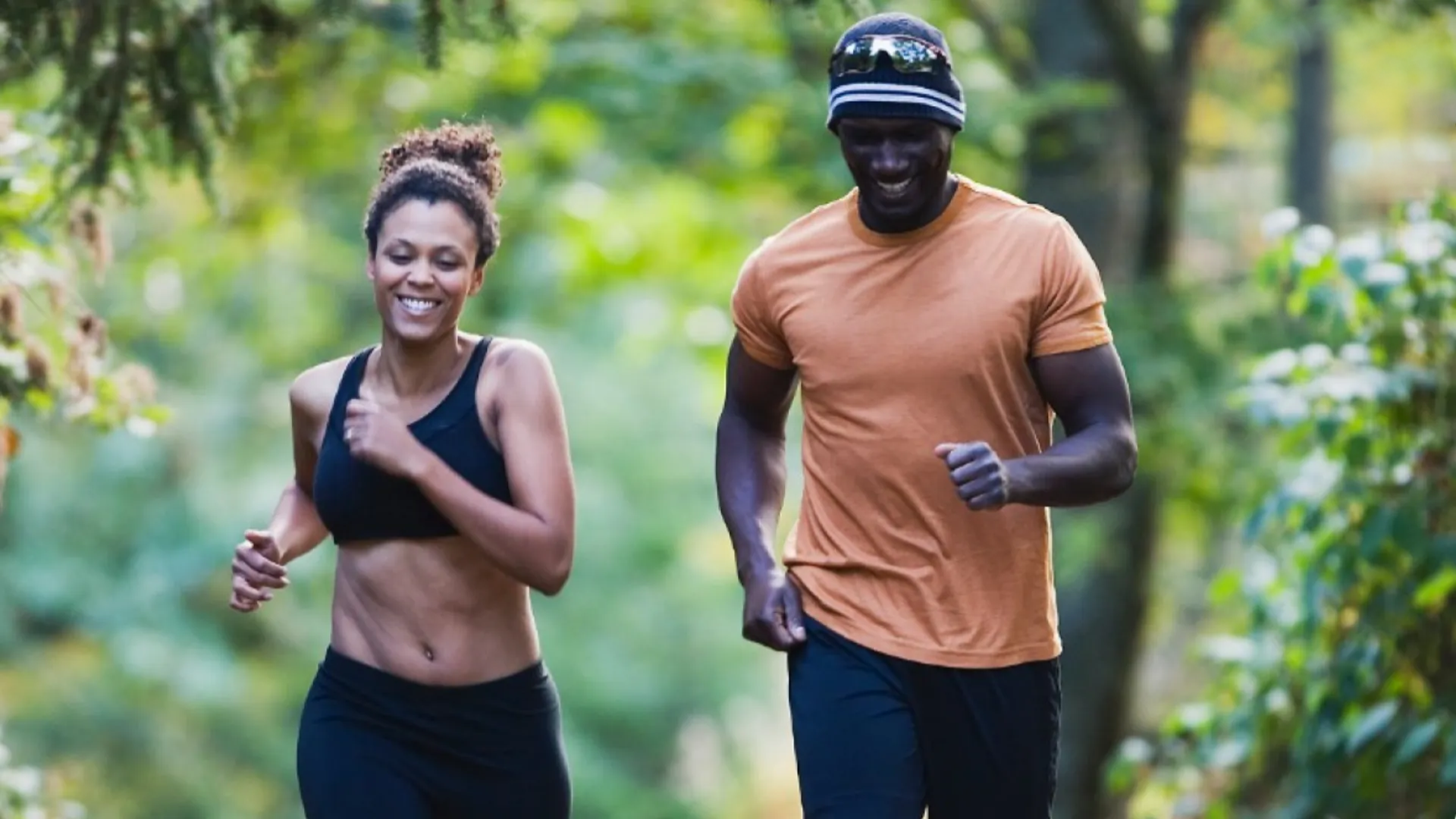
Working Out Together Doesn’t Mean Doing Everything the Same
One common misconception about couples training together is that you have to do the exact same workout. You don’t.
In fact, you may have completely different fitness levels, goals, and abilities:
One person might enjoy strength training while the other prefers cycling or walking.
One person might be focused on building muscle while the other wants to improve flexibility and mobility.
That’s perfectly okay. The goal isn’t to become identical. The goal is to support each other.
How to Share the Experience
You can still share by:
Going to the gym together
Exercising at the same time
Encouraging each other
Celebrating progress
Sharing healthy meals
Creating routines that work for both of you
A successful fitness partnership isn’t about doing the same thing. It’s about moving in the same direction.
Working Out with a Partner of Different Fitness Levels
When couples with different fitness levels train together, the key to success is matching the level of personal physical effort rather than the amount of weight on the bar or the speed on the treadmill.
You can stand right next to each other at the gym while using completely different dumbbells, or use a synchronized timer where you both perform your own chosen movements at your own pace. You stay side-by-side, sharing the energy and the timeline of the workout, without either person feeling pushed beyond their safe limits. This structural setup allows you to maintain an individualized couples workout routine split while staying physically connected.
Fitness Can Improve More Than Your Physical Health
Most people start exercising because they want physical results. Maybe they want to lose weight, build muscle, improve their health markers, or feel more confident. But the benefits go far beyond appearance.
Regular exercise can improve:
Energy levels
Mood
Sleep quality
Stress management
Confidence
Overall quality of life
And when both partners experience these benefits, the entire relationship can improve. Think about it. When you feel better physically, you often have more patience, more energy, and a more positive outlook. You’re more likely to participate in activities together. You’re more likely to enjoy experiences that require physical activity.
Vital Health Benefits of Fitness for Couples Over 50
As we age, prioritizing our physical health becomes less about aesthetics and much more about functional longevity. Incorporating joint mobility, core stability, and cardiovascular health into your shared lifestyle ensures that you can both actively participate in life together for decades to come.
Fitness after 50 is about protecting your functional mobility, supporting bone density, and maintaining your absolute independence. It’s about being strong enough to travel the world, play with grandchildren, hike, golf, garden, and handle daily physical tasks with total ease. Having someone beside you with the exact same health mindset makes that long-term journey even better.
The Biological Bonding Effect
There is a fascinating chemical reason why exercising together improves your relationship dynamic. When you exert yourself physically, your brain releases a potent cocktail of feel-good neurochemicals like endorphins and dopamine. Experiencing this vitality and rush of accomplishment right alongside your partner naturally builds deep positive associations, reinforcing feelings of teamwork and closeness.
Encourage Each Other Instead of Competing
One mistake some couples make when training together is turning fitness into a competition. A little friendly competition can be fun, but remember — you’re on the same team.
Your partner’s success doesn’t take away from yours. If your spouse increases their strength, improves their health, or reaches a milestone, that’s something to celebrate.
The goal is not:
“Who is fitter?”
The goal is:
“How can we both become healthier?”
Everyone progresses differently. Maybe one person loses weight faster. Maybe one person gains strength quicker. Maybe one person is more naturally motivated. That’s normal. The best fitness partners lift each other up rather than compare results.
Leaving the "Coach" Role at the Door
If you happen to be the partner with more fitness experience, it can be tempting to constantly correct your spouse’s form or give unasked-for advice. While it comes from a place of love, unsolicited coaching can quickly make a partner feel self-conscious. It shifts the dynamic from a partnership of equals to a teacher-student relationship.
Unless your partner explicitly asks for help, your primary job is to be their biggest fan. Focus on offering positive reinforcement. If technical guidance is needed for safety, consider investing in a few sessions with a professional personal trainer so that both of you can remain on the same level as supportive teammates.
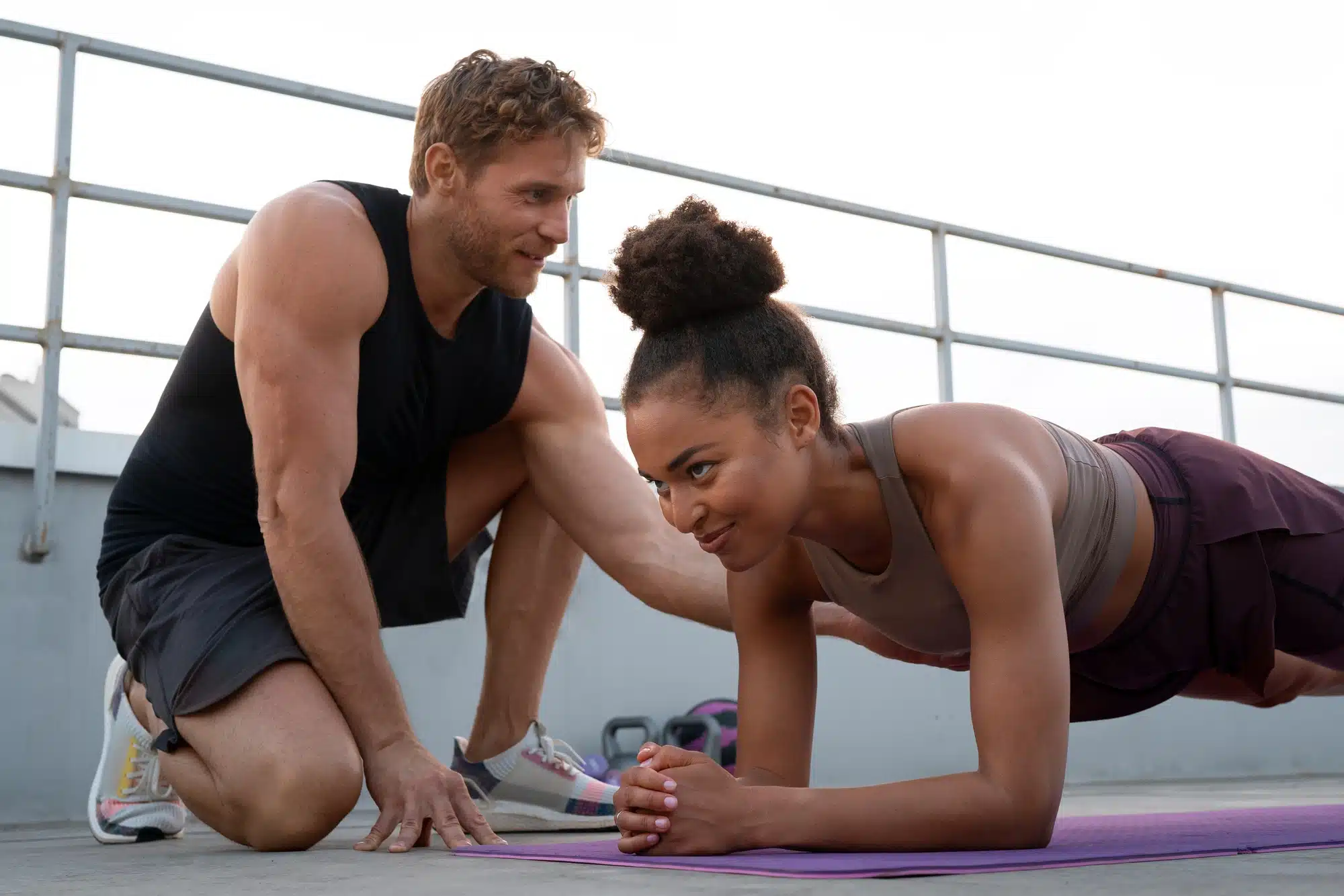
How to Start Training Together (Without Making It Complicated)
If you are ready to learn how to train with your partner, don’t overcomplicate it. You don’t need a perfect workout plan, expensive equipment, or hours in the gym.
Start small with these highly effective methods to get moving together.
Commit to Low-Impact Daily Walks
Walking is one of the most underrated forms of exercise. A daily 20-to-30-minute walk gives you excellent cardiovascular benefits, helps with joint mobility, and creates an uninterrupted space to talk. Many couples find that some of their best conversations happen while walking through their neighborhood after dinner without any screens around.
Incorporate Functional Strength Training
Strength training becomes increasingly important as we age. Building and maintaining lean muscle tissue helps support your joints, protects your bone density, improves your balance, and keeps your metabolism active. You can train together right at home with a basic set of resistance bands or dumbbells, or join a local community center. Simple, functional movements like squats, rows, overhead presses, and core work provide massive returns for everyday life.
Explore New Physical Activities Together
Strength training becomes increasingly important as we age. Building and maintaining lean muscle tissue helps support your joints, protects your bone density, improves your balance, and keeps your metabolism active. You can train together right at home with a basic set of resistance bands or dumbbells, or join a local community center. Simple, functional movements like squats, rows, overhead presses, and core work provide massive returns for everyday life.
Set a Defined Team Target
Goals create a clear sense of direction. Sit down together and define what success looks like for your household over the next few months. Make it specific but entirely achievable:
“We want to walk 10,000 steps a day together.”
“We want to sign up for a local charity 5K walk.”
“We want to commit to two strength workouts a week.”
“We want to prioritize getting 8 hours of sleep a night.”
Having a clear target keeps your efforts coordinated and gives you a specific milestone to celebrate together when you cross the finish line.
Healthy Eating Is Easier When You’re a Team
Fitness isn’t only about exercise. Nutrition plays a major role too. And this is another area where couples can support each other.
It can be difficult when one person is trying to eat healthier and the other person continues with old habits. But when both partners commit to better nutrition, it becomes much easier.
You can:
Plan meals together
Shop for healthier foods
Cook together
Try new recipes
Support each other when challenges come up
Food doesn’t have to become restrictive or boring. Healthy eating can simply mean making better choices more often.
Your Relationship Is Worth Investing In
As couples get older, priorities often change. You may have spent years focusing on careers, raising children, or taking care of everyone else. But eventually, it’s important to focus on yourselves too.
Your health affects every part of your life — including your relationship. Being healthier allows you to enjoy more experiences together. It gives you more energy for adventures. It helps you remain active and independent.
And perhaps most importantly, it shows your partner: “I want to be around for many more years with you.”
That’s a powerful commitment.
Build Health Together
Fitness is not just about changing your body. It’s about creating a healthier lifestyle that allows you to enjoy life more fully.
When couples train together, they create something bigger than a workout routine. They create teamwork, accountability, encouragement, and shared success.
There will be days when one person is more motivated than the other. There will be setbacks. There will be challenges. That’s part of the journey. But when you have someone beside you, the journey becomes easier and more enjoyable.
So whether you’re starting with a daily walk, joining a gym, trying strength training, or simply making healthier choices together, remember this:
Couples who train together don’t just build stronger bodies. They build stronger relationships.