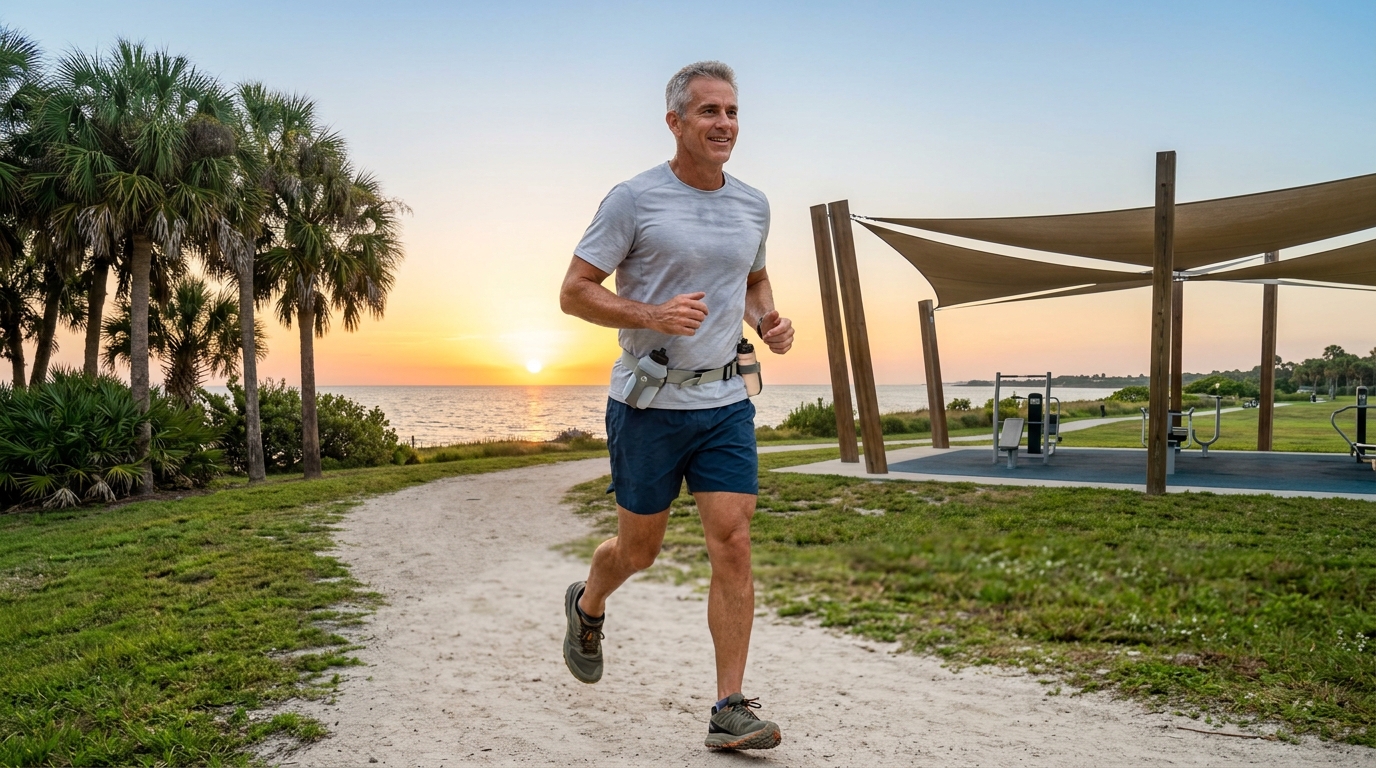

If you are a man over 50 in California, you already have a massive advantage: the weather. While guys in other states are trapped indoors for months, you can walk the coast, hit a local trail, or train in a sunny park year-round.
That matters because after 50, consistency is your master lever for preserving strength, muscle mass, mobility, and everyday energy.
The best exercises for us aren’t the flashiest or most intense. The real goal is prioritizing functional movements you can safely recover from and repeat for years without burning out or wrecking your joints. A truly effective routine requires a smart mix of strength training, walking, mobility, balance, and low-impact conditioning.
Let’s break down the best exercises for California men over 50, why they work, and how to combine them into a practical weekly template designed for true physical longevity.
Why Exercise Shifts From Optional to Essential After 50
After 50, fitness shifts from how you look to what your body can handle. When you train hard, you are actually tearing your body down and stressing your nervous system. Your muscles don’t grow during the workout; they rebuild only while you rest. If you aren’t recovering properly, you aren’t just slowing your progress—you are actively draining your energy, hurting your hormones, and stopping your muscles from repairing.
That means exercise is the mechanism that ensures you can:
- Carry heavy groceries or luggage without straining your back
- Get up from the floor smoothly and easily
- Hike, bike, play golf, or travel without feeling physically exhausted the next day
- Preserve vital muscle mass and physical strength
- Support a healthy metabolism and optimal body composition
- Maintain total independence and physical confidence as you age
Naturally, men tend to lose muscle mass and bone density as they age if they do not actively work to prevent it. This age-related decline gradually impacts your overall strength, everyday energy levels, posture, balance, and physical confidence. Because the process is slow, it often goes unnoticed until routine daily tasks suddenly begin to feel more taxing than they used to.
The encouraging news is that the right exercise strategy can slow down, and even reverse, much of this process. You do not need to subject yourself to extreme, high-impact workouts. What you need are consistent, intelligent training sessions that your body can successfully recover from and adapt to over time.
The Best Exercise Categories for Men Over 50 in California
1. Strength Training
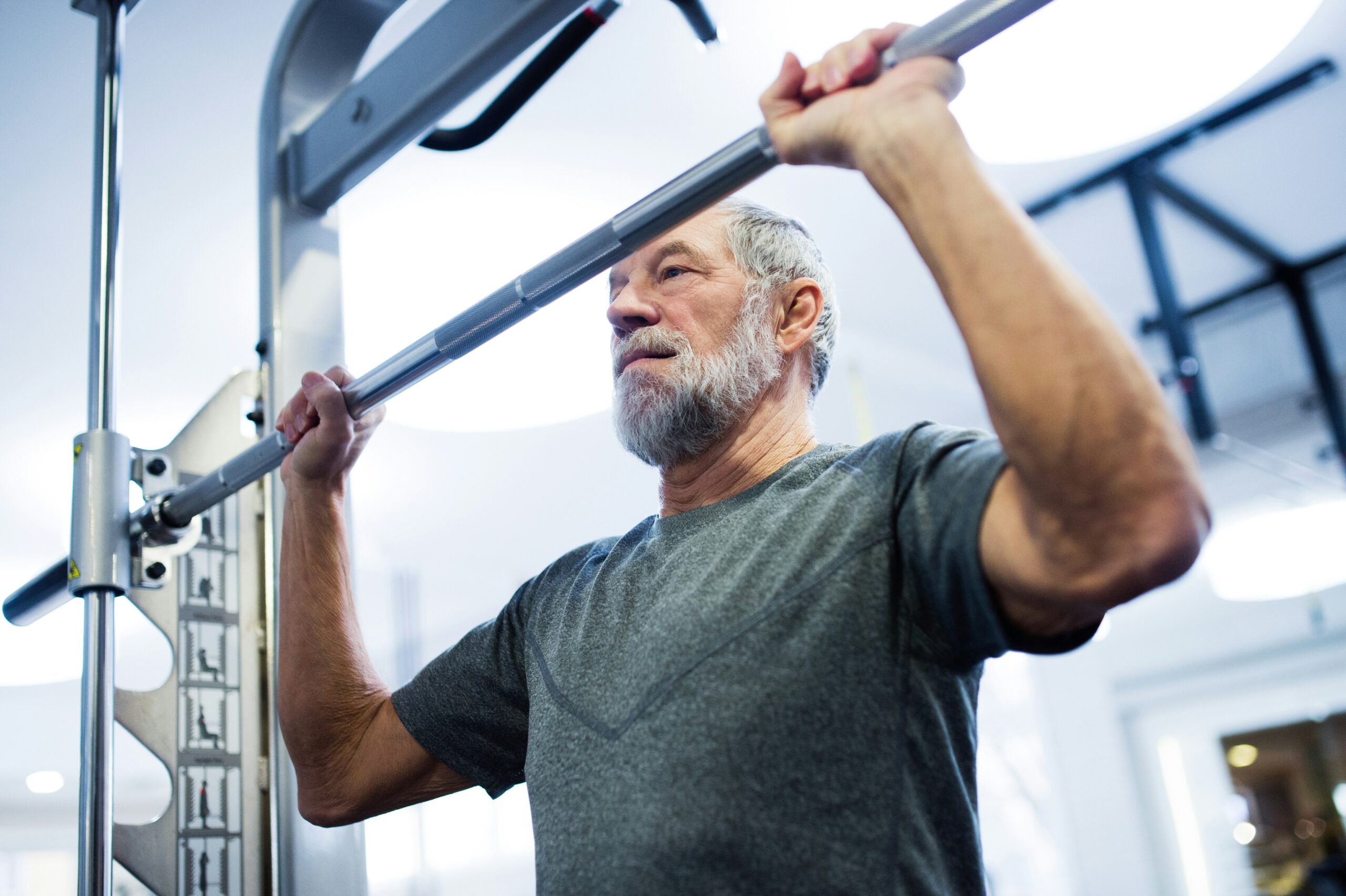
If there is one specific category that should sit at the absolute center of your weekly routine, it is strength training. Resistance training is the most effective tool available to build and preserve muscle mass, support and protect your joints, improve bone density, and keep your metabolic rate elevated. It is the foundation that makes everyday physical life feel noticeably easier.
For men over 50, the most productive strength exercises are compound movements—exercises that recruit and train multiple major muscle groups simultaneously. These are the true “money-makers” of fitness:
- Squats (bodyweight, goblet, or barbell)
- Lunges and split squats
- Deadlift variations (such as Romanian deadlifts or trap bar deadlifts)
- Dumbbell chest presses
- Push-ups (floor or inclined)
- Rowing variations (dumbbell, cable, or bodyweight rows)
- Overhead presses
- Farmer’s carries (walking while holding weights)
When executing these moves, you do not need to chase maximal weights or risk your safety. Focus instead on excellent form, controlled tempos, and progressive overload (gradually increasing the challenge over time).
A well-designed strength session can be done effectively in a commercial gym, at home with a basic set of dumbbells, or even outdoors using simple equipment. This versatility makes it highly realistic to stick with, whether you prefer the structure of indoor training or taking advantage of the California sunshine.
- Optimal Strength Schedule: 2 to 4 sessions per week
- Target Repetition Range: 6 to 12 reps for most primary movements, with lighter weight and higher reps utilized for specific mobility or endurance work.
2. Walking
Walking remains one of the most underrated and accessible forms of exercise for men over 50. It is simple, low-impact, incredibly easy to recover from, and highly effective for cardiovascular health, fat loss, and maintaining steady daily activity levels.
One of the greatest advantages of regular walking is that it does not drain your energy reserves. In fact, a brisk walk actively helps your body recover from harder strength training days by promoting blood flow, all while keeping you active and burning calories.
Living in California gives you an incredible array of backdrops for a daily walk. You can easily accumulate steps along coastal beaches or boardwalks, through your local neighborhood, on an inclined treadmill, on a nearby trail, around a golf course, or directly after meals to support healthy digestion and blood sugar control.
Walking is uniquely valuable because it delivers cardiovascular benefits without placing excessive stress on your joints the way higher-impact cardio often can. If you are currently returning to fitness after a period of inactivity, walking is frequently the absolute best place to start because it allows you to build momentum without physical resistance.
- Daily Target: Aim for 7,000 to 10,000 steps per day, adjusted appropriately to your current baseline fitness level.

3. Hiking
California boasts some of the finest trails in the country, making hiking a major advantage for your long-term fitness. It builds lower-body endurance, challenges your heart, improves joint stability, and gets you outside regularly.
Best of all, hiking changes the mental dynamic of exercise. Instead of feeling like a repetitive gym chore, it becomes an engaging weekend activity you can actually look forward to.
It is also highly scalable. You can opt for flat, well-groomed paths to build baseline conditioning, or introduce moderate inclines to increase the challenge. Simply keep your pace conversational to stay in a sustainable aerobic zone, and use hiking poles if your knees and ankles need extra support.
As a premier longevity workout, hiking builds physical fitness while lowering your stress levels. If you live near coastal paths, hills, or mountain trails, adding a weekly hike is an easy lifestyle win.
4. Bodyweight Training
Bodyweight training, or calisthenics, is a highly practical way to stay fit over 50 because it requires no specialized equipment and can be done anywhere. It builds functional strength—focused on body control, core stability, and coordination—that carries over directly into your daily life.
Excellent moves to include are push-ups, squats, step-ups, planks, glute bridges, bird dogs, and dead bugs. These exercises are fantastic for building core strength while keeping joint stress significantly lower than heavy weightlifting, making them perfect if you travel often or prefer working out at home or in a park.
The key to long-term progress is gradual challenge. You can easily make bodyweight movements harder by increasing your reps, slowing down your tempo (like taking three seconds to lower yourself), adding brief pauses at the hardest part of the move, or moving to slightly more advanced variations.
5. Mobility and Stretching
Past 50, mobility work is no longer just an optional warm-up; it is a vital part of your core training. While often confused with basic stretching, true mobility is about active joint control. It reduces chronic stiffness, ensures you can move freely through a full range of motion, and keeps your primary strength training feeling smooth and unrestricted.
To maintain youthful movement, your routine should focus heavily on key areas like the hips, ankles, mid-back, shoulders, hamstrings, and hip flexors.
Highly effective movements to include are half-kneeling hip flexor stretches, 90/90 hip switches, mid-back rotations, ankle rocks, and deep, assisted squat holds. Dedicating just 5 to 10 minutes to these movements before a strength workout or a long walk can dramatically improve how your body feels and performs.
6. Balance Training
Balance is a physical attribute that many men completely ignore until they begin to notice it subtly slipping away. However, proactive balance training dictates far more than most people realize—affecting your walking confidence, your stability on uneven hiking terrain, and the overall safety of your joints under load.
Simple, highly effective balance drills include single-leg stands (holding for 30–60 seconds per side), single-leg Romanian deadlifts with light weight, heel-to-toe tandem walking, controlled step-ups with a pause at the top, slow split squats, and standing marches with a distinct pause at peak hip flexion. You do not need to dedicate long, exhausting sessions to this attribute. Integrating just a few minutes of balance work two or three times a week can yield a highly noticeable difference in your stability and coordination.
7. Low-Impact Cardio
Cardiovascular conditioning remains vital for your heart and endurance, but after 50, the focus should pivot toward recovery-friendly, low-impact options. High-intensity cardio that pounds your joints often interferes with your strength recovery.
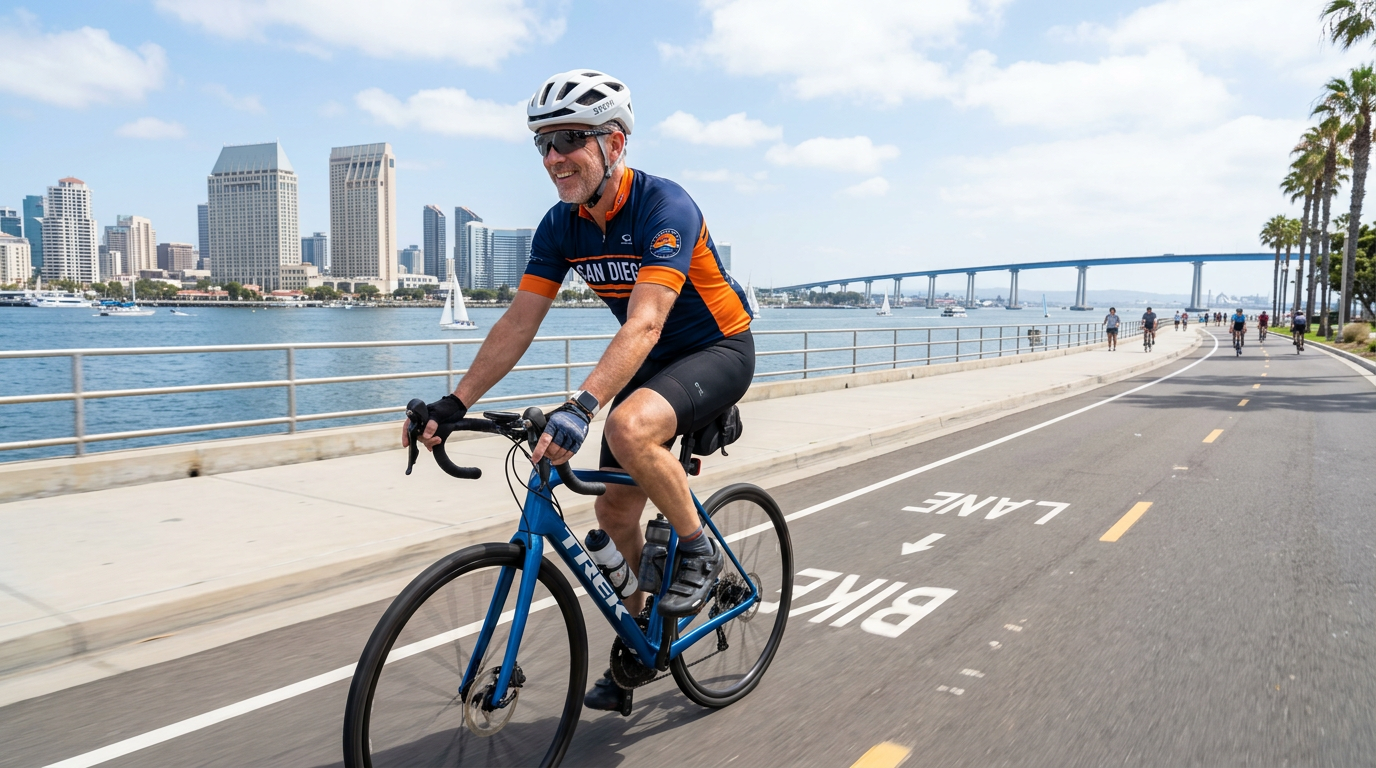
Instead, prioritize steady-state options like brisk walking, cycling, indoor rowing, swimming, or incline treadmill walking.
The favorable weather in California makes it incredibly easy to take most of these cardio sessions outdoors year-round. Just remember, the goal is heart health, aerobic endurance, and metabolic support—not absolute exhaustion. Your cardio should always complement your strength training, rather than drain you to the point where you cannot lift effectively.
A Sustainable Weekly Workout Template
Here is a straightforward, balanced weekly structure that provides an ideal blend of activity and recovery for men over 50:
- Monday: Full-Body Strength Training (30-45 mins) + Short Post-Workout Walk
- Tuesday: Brisk Walking or Trail Hiking + 10 Minutes of Dedicated Mobility Work
- Wednesday: Full-Body Strength Training (30-45 mins)
- Thursday: Low-Impact Cardio (Cycling/Rowing) + 5 Minutes of Balance Work
- Friday: Full-Body Strength Training (30-45 mins) + Focused Core Work
- Saturday: Extended Outdoor Activity (Longer walk, coastal hike, bike ride, or golf)
- Sunday: Active Recovery (Light mobility, stretching, or complete rest)
This structure provides your muscles and bones with an adequate training stimulus to improve while respecting your body’s need for recovery. Even sticking to just three structured strength sessions per week can generate remarkable physical improvements over the course of a few months.
Key Principles of Training for Longevity
To train successfully for true longevity, keep these core principles in mind:
- Avoid Testing Your Maximum Weight Limits: Leave the true maximal lifting to competitive athletes. Focus on controlled, high-quality efforts. Testing your one-rep max places an unnecessary amount of stress on your central nervous system (CNS) and connective tissues, raising the risk of injury for no significant functional return.
- Prioritize Perfect Form Over Heavy Loads: A lighter weight moved with absolute control builds more functional muscle and carries a fraction of the injury risk. If you are compensating with other muscle groups or introducing momentum to complete a lift, the weight is too heavy. Focus on clean mechanics.
- Keep Repetitions in Reserve (RIR): You do not need to train to total muscular failure on every set. Finishing a set knowing you could have performed 1 or 2 more clean repetitions (1–2 RIR) is highly effective for stimulating muscle growth and safety. It protects your joints and prevents systemic burnout.
- Invest Heavily in Recovery and Sleep: Your body does not grow stronger during the workout itself; it grows stronger during the recovery periods. Sleep is an active, aggressive state of biological repair. Deep sleep triggers the release of growth hormone, which stimulates protein synthesis and repairs tissue. Ensure you are taking your recovery protocols as seriously as your training protocols.
- Prioritize Dietary Protein Intake: Nutritional needs shift slightly past 50. Consuming adequate dietary protein throughout the day is absolutely essential to help your body repair tissue, recover from workouts, and maintain your existing muscle mass. Aim for high-quality, whole-food protein sources to support your training volume.
Capitalizing on the California Environment
Living in California provides a built-in lifestyle advantage that can make fitness feel far less restrictive. The environment naturally lends itself to consistent physical activity due to predictable, year-round outdoor weather, an expansive network of state and coastal hiking trails, scenic beachfront paths, and abundant public parks.
The secret to long-term compliance is to leverage your environment rather than ignore it. On days when a stuffy indoor gym feels unappealing, a brisk 45-minute outdoor walk or a local hike can easily fulfill your activity goals for the day.
Common Mistakes to Avoid After 50
To keep your progress moving forward without setbacks, be mindful of these common training pitfalls:
- Doing too much, too soon: Rushing into a high-volume routine after a period of inactivity is the fastest route to chronic overuse injuries or mental burnout.
- Neglecting strength training in favor of cardio alone: While cardio is excellent for your heart, it cannot prevent the age-related loss of muscle mass and bone density. Resistance training is non-negotiable.
- Bypassing mobility and flexibility work: Joint stiffness builds up quietly over years. Ignoring it eventually restricts your movement patterns and leads to compensation injuries.
- Prioritizing perfection over consistency: You do not need a flawless diet or a perfect workout every single day. A good, sensible workout performed consistently week after week will always outperform a perfect routine that you can only stick to for a month.
Signs That Your Routine Is Working
Physical body composition changes take time, but you do not have to wait months to know if your program is working. Look for these immediate, positive indicators:
- Noticeably higher, more sustained daily energy levels
- Decreased morning joint stiffness and muscle tightness (less “creakiness”)
- Improved resting posture and spinal alignment
- Deeper, more restorative sleep patterns
- Greater ease during ordinary movements, like getting out of a car or bending down
- An improved overall mood and enhanced stress resilience
These functional improvements almost always manifest well before significant changes show up on the scale or in the mirror.

For the man over 50, fitness is no longer a game of “who can suffer the most.” It is a game of optimization. You cannot “hustle” your way past your biology.
The ideal exercise approach for men over 50 in California centers on building a body that is strong, agile, and resilient. By placing strength training at the core of your routine, utilizing walking and hiking for daily aerobic conditioning, incorporating bodyweight work for functional control, and respecting your joint health through mobility and balance work, you are actively investing in your long-term health.
You do not need a flawless, hyper-complicated plan to see incredible results. You simply need a sensible, sustainable routine that you can perform with consistency. And given the spectacular California environment right outside your door, you already have one of the best settings in the world to make it happen.